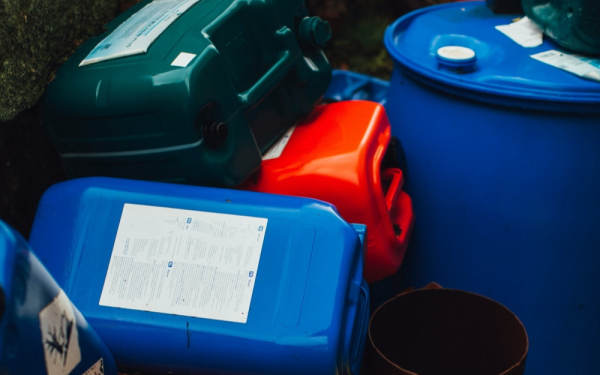
Hazardous Waste Management: Duty of Care and Compliance


Overview
Organisations that produce, store or arrange the disposal of hazardous waste have additional legal responsibilities beyond those applying to general business waste.
Hazardous waste can arise from many routine activities, including maintenance, manufacturing, laboratories, cleaning, construction, vehicle servicing and facilities management. Common examples include waste oils, solvents, paints, chemicals, contaminated absorbents, aerosols, batteries, fluorescent lamps, electrical equipment, asbestos and contaminated soils.
Correct management starts with identifying and classifying the waste. The producer must then ensure that it is segregated and stored safely, transferred only to appropriately authorised organisations and accompanied by the correct documentation.
Using a waste contractor does not transfer all responsibility away from the waste producer. Organisations need systems for checking carriers and destination sites, providing an accurate description of the waste, completing consignment documentation and retaining records.
This one-day course provides a practical introduction to hazardous waste management for organisations that produce or hold waste. It explains how to determine whether a waste is hazardous, use waste classification codes, understand hazardous properties, manage waste on site and control its transfer to contractors.
Practical exercises include waste classification, checking contractor authorisations and completing and reviewing hazardous waste consignment documentation.
Why this course is important
Waste must be correctly identified and classified before it is sent for recycling, recovery or disposal.
A product being hazardous does not automatically tell you how the resulting waste should be classified. Equally, apparently routine wastes may require hazardous classification because of their composition or contamination.
Producers need to understand the List of Waste codes and the distinction between wastes that are automatically hazardous and wastes where composition and hazardous properties must be assessed.
Errors in classification can affect storage, transport, treatment and disposal routes. An incorrect waste description can also result in a load being rejected by the receiving facility.
Hazardous waste must normally be kept separate from non-hazardous waste and from incompatible categories of hazardous waste. Organisations also need to check that waste carriers are registered and that receiving facilities are authorised to accept the particular waste concerned.
The course gives delegates a structured method for managing these responsibilities from the point at which waste is generated through to collection, transfer and confirmation of its receipt.
Who should attend?
This course is suitable for anyone responsible for producing, storing, classifying or arranging the collection of hazardous waste, including:
- Environmental managers and advisers
- Health, safety and environmental managers
- Facilities and estates managers
- Waste and recycling managers
- Site managers
- Production and operations managers
- Maintenance managers and supervisors
- Laboratory and technical managers
- Engineering personnel
- Procurement and contract managers responsible for waste services
- Staff responsible for waste documentation and environmental compliance
What you'll learn:
On completion of the course, attendees will:
Course Programme:
9:00–9:30 | Registration
9:30–9:45 | Welcome and introduction
9:45–10:45 | Hazardous waste responsibilities and legal framework
• Definition of waste and common hazardous waste types.
• UK hazardous waste legislation and duty of care requirements.
• Responsibilities of waste producers, holders and contractors.
• Environmental permits and waste hierarchy.
• Differences in requirements across the UK.
10:45–11:00 | Break
11:00–12:00 | Identifying and classifying hazardous waste
• Identifying hazardous waste and assessing its composition.
• Selecting List of Waste (EWC) codes.
• Absolute and mirror entries.
• WM3 guidance and hazardous properties HP1–HP15.
• Persistent Organic Pollutants (POPs), thresholds and sampling.
12:00–13:00 | Lunch
13:00–14:00 | Storage, segregation and control on site
• Safe storage, containers, labelling and containment.
• Segregation of hazardous and incompatible wastes.
• Managing common waste streams, including oils, batteries and aerosols.
• Preventing spills, pollution, fires and chemical reactions.
• Site inspections, emergency arrangements and storage restrictions.
14:00–14:45 | Waste contractors, transfers and consignment notes
• Selecting contractors and checking registrations and permits.
• Checking waste destinations and disposal routes.
• Hazardous waste consignment note requirements.
• Completing and checking consignment notes.
• Waste descriptions, quantities, packaging and dangerous-goods information.
14:45–15:00 | Break
15:00–16:00 | Records, digital tracking and compliance checks
• Hazardous waste records, consignment notes and consignee returns.
• Tracking waste movements and dealing with rejected loads.
• Identifying documentation errors and compliance failures.
• Digital Waste Tracking requirements and preparation.
• Internal audits, contractor checks and corrective actions.
• Questions and course review
16:00 | Close