
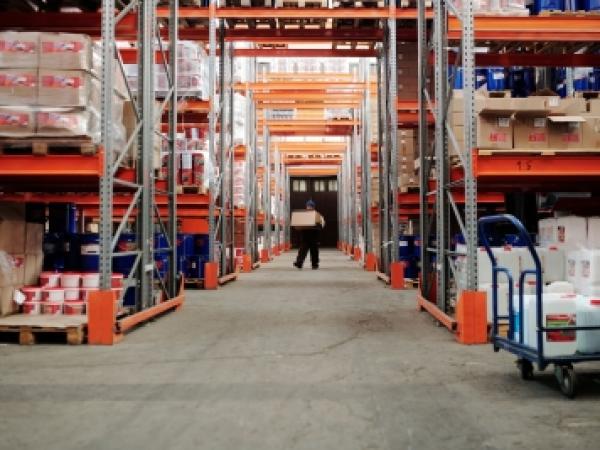
For employers in Great Britain, the Manual Handling Operations Regulations 1992 require a clear sequence of action: avoid hazardous manual handling so far as reasonably practicable, assess operations that cannot be avoided, and reduce the risk of injury as far as reasonably practicable. Northern Ireland has separate Manual Handling Operations Regulations (Northern Ireland) 1992 with a comparable hierarchy of controls.
What Counts As Manual Handling
Manual handling covers transporting or supporting a load by hand or bodily force. It includes lifting, putting down, pushing, pulling, carrying and moving. A load may be an object, a person or an animal.
The Regulations do not set a universal weight limit below which a lift is automatically safe. Load weight matters, but the level of risk also depends on the task, working environment and the person carrying out the work.
That distinction matters when organisations set internal rules. A simple maximum lifting weight cannot replace consideration of how a load is handled, where it is moved, how often the task occurs or whether the worker has characteristics that affect their capability.
The First Duty Is To Avoid Hazardous Handling Where Possible
The starting point is to consider whether the hazardous manual handling operation is necessary at all. Where reasonably practicable, employers should remove the need for workers to perform it.
Official guidance identifies task redesign, automation and mechanisation as ways of doing this. Decisions about workplace and process design can therefore determine whether a manual handling exposure exists. Conveyors, hoists, pallet trucks and other mechanical aids may remove or reduce the physical handling required.
For managers, this puts purchasing, layout and process decisions within the manual handling control process. An assessment should not begin from an assumption that employees will continue lifting or carrying in the existing way.
Assessing Handling That Cannot Be Avoided
Where hazardous manual handling remains, employers must assess the risk of injury. The assessment should consider the task, load, working environment and individual capability.
Relevant factors include posture, lifting or carrying distance, frequency, load weight and characteristics, available space, floor condition, lighting and temperature. Individual factors can include strength, fitness and underlying medical conditions.
Employees and their representatives should be involved. People doing the work may identify awkward operations, fatigue, difficult loads or practical changes that are less apparent from a written procedure.
Not every task needs a detailed assessment. Official risk filters can help identify low-risk work, while assessment tools are available for lifting, carrying, team handling, variable loads, pushing and pulling, and repetitive upper-limb work.
Reducing Risk After Assessment
Where manual handling remains necessary, employers must reduce the risk of injury as far as reasonably practicable. Mechanical assistance should be considered, followed by changes to the task, load or working environment where appropriate.
Possible measures include reducing load size or weight, shortening carrying distances, reducing twisting, avoiding lifts from floor level or above shoulder height, changing excessive work rates and improving floor conditions, space or lighting.
Training forms part of this control process, but training alone does not make an inadequately designed operation safe. It should reflect the actual work, equipment and systems employees use, with practical instruction where appropriate. Procedures should then be monitored and reviewed to check that workers understand and apply them.
Information About Loads
Where there is a risk of injury, the Regulations include requirements concerning information about loads. This can include the weight of a load and, where relevant, information about its heaviest side or centre of gravity when reasonably practicable.
Common Compliance Gaps
Recurring weaknesses include treating training as the main control, relying on a standard weight limit, assessing a lift without examining the surrounding task, and retaining manual handling where mechanical assistance or process redesign is reasonably practicable. Another weakness is failing to review controls after the layout, workload, equipment or handling method changes.
Manager Checklist
- Confirm which activities involve potentially hazardous manual handling.
- Establish whether each operation can be eliminated, automated or mechanised.
- Check that remaining risks have been assessed using task, load, environment and individual factors.
- Involve employees who regularly perform the work.
- Verify that handling aids are suitable for the operations they are intended to control.
- Check that training relates to actual tasks, equipment and systems of work.
- Review whether controls are being followed and remain effective.
FAQ
Is there a maximum legal lifting weight?
No universal maximum weight is set by the Regulations. Weight is one factor within the wider assessment of the handling operation.
Does every manual handling task need a detailed written assessment?
No. Some operations may be sufficiently low risk that a detailed assessment is unnecessary. Official risk filters can help determine when further assessment is needed.
Is manual handling training enough to comply?
No. Training can reduce risk, but employers must first consider avoidance and suitable measures to reduce risks that remain.
Do the same Regulations apply in Northern Ireland?
Northern Ireland has separate Manual Handling Operations Regulations (Northern Ireland) 1992. Employers operating there should apply the Northern Ireland regime.