
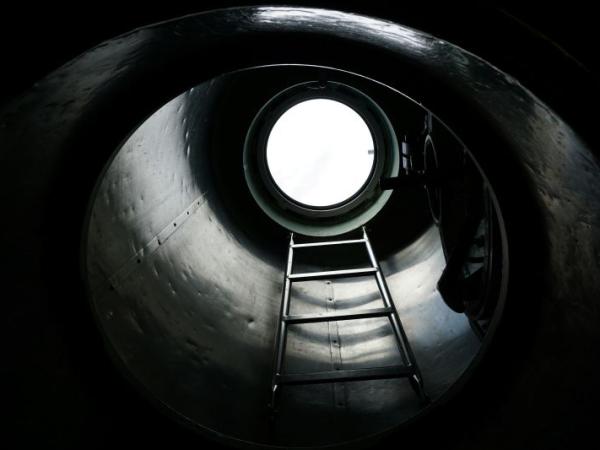
Overview
In Great Britain, a workplace area is a confined space under the Confined Spaces Regulations 1997 when it is substantially enclosed and one or more defined "specified risks" are present or reasonably foreseeable. Size, restricted access and the amount of time people spend there do not decide the question. Northern Ireland has separate Confined Spaces Regulations (Northern Ireland) 1999.
The Two Tests for a Confined Space
The 1997 Regulations define a confined space as any place where, because of its enclosed nature, a reasonably foreseeable specified risk arises. HSE's Approved Code of Practice, L101, turns this into a two-part test: the space must be substantially, although not necessarily entirely, enclosed, and at least one specified risk must be present or reasonably foreseeable.
Both elements matter. An enclosed area without a specified risk does not meet this definition. Equally, the presence of a hazardous condition does not by itself make an open workplace a confined space under these Regulations.
HSE's decision process starts by asking about enclosure, then considers existing risks and risks that the proposed work may introduce.
Which Risks Bring a Space Within Scope?
The Regulations define the risks that bring an enclosed space within scope. They are:
- serious injury from fire or explosion;
- loss of consciousness caused by increased body temperature;
- loss of consciousness or asphyxiation caused by gas, fume, vapour or lack of oxygen;
- drowning caused by an increase in the level of liquid; and
- asphyxiation from a free-flowing solid, including entrapment that prevents a person reaching a respirable environment.
The classification exercise therefore needs to consider foreseeable conditions, not simply the physical description of the location.
Size and Access Do Not Decide the Issue
HSE states that a confined space does not have to be enclosed on every side, small, difficult to enter or leave, or somewhere people rarely work. Open-topped vats and silos can qualify. Large areas can qualify. A space with several entrances can also fall within the definition.
The Regulations themselves name chambers, tanks, vats, silos, pits, trenches, pipes, sewers, flues and wells. HSE guidance extends the practical examples to locations including ducts, culverts, manholes, shafts, building voids and some enclosed rooms, particularly plant rooms. Those examples qualify only where the enclosure and specified-risk tests are met.
This distinction matters for premises surveys. A register based only on tanks, vessels and sewers can miss less obvious areas that meet the same legal test.
Work Activities Can Create a Confined Space
Classification is not necessarily permanent. HSE explains that an enclosed area may become a confined space because conditions change or because the task introduces a specified risk.
Welding may consume oxygen, paint spraying may affect the atmosphere, and cleaning chemicals may introduce contaminants. External conditions can alter the assessment too. HSE gives heavy rain as an example of a change that may create a foreseeable drowning risk in an area that would not normally be regarded as confined.
A task-based assessment therefore needs to consider what will happen during the work as well as the condition found before it starts.
Where a space has been identified as confined, HSE states that the Regulations apply even where the specified risk is being controlled. Its status may later change if the specified risk has been removed and, where relevant, the atmosphere has been established as safe.
What the Regulations Require Once a Space Qualifies
HSE says the risk assessment should establish whether an area is a confined space. Where it is, the first consideration is whether entry can be avoided.
If entry cannot reasonably be avoided, the Confined Spaces Regulations require a safe system of work, with adequate emergency arrangements made before work begins.
For managers using contractors, HSE's ACOP also calls for competent contractors and a clear understanding of respective responsibilities. That makes the classification decision part of work planning and contractor control, not a premises-labelling exercise alone.
Common Compliance Gaps
Problems can arise when teams classify areas by appearance, assume open tops or large access points rule out the Regulations, or rely on an old register without considering changed tasks or conditions.
Another weakness is assuming that controlling the hazard automatically removes confined-space status while the relevant risk remains. HSE's guidance requires the assessment to consider the actual space, the planned activity and foreseeable changes.
Manager Checklist
- Check whether potentially affected areas are substantially or entirely enclosed.
- Test each candidate space against the specified risks in the Regulations.
- Consider hazards introduced by the proposed task, not only existing conditions.
- Review whether weather, contents, processes or the degree of enclosure could change the classification.
- Make sure the assessment is completed by someone competent for the work and equipment involved.
- Where the Regulations apply, verify that avoiding entry has been considered before planning confined-space entry.
- Confirm responsibilities where contractors or several employers are involved.
Frequently Asked Questions
Does a confined space have to be small?
No. HSE states that some confined spaces can be very large. Size is not one of the two defining features.
Can an open-topped area be a confined space?
Yes. A space can be substantially enclosed without being enclosed on every side. HSE specifically identifies vats and silos as examples that may have open tops or sides.
Can a workplace become a confined space only while a task is taking place?
Yes. HSE guidance explains that work such as welding, spraying or chemical cleaning can introduce a specified risk and change the status of the area for the duration of that condition.
Does controlling the risk mean the space immediately stops being confined?
No automatic assumption should be made. HSE says the Regulations apply in full once the space is identified as confined, even where the specified risk is controlled. Status can change when the relevant risk has been removed and the conditions have been established as safe where necessary.