
Overview
Work at height must be properly planned, supervised and carried out by competent people using suitable equipment. Managers should first challenge whether the work needs to be done at height, then confirm that falls are prevented or, where a remaining risk cannot be eliminated, that the distance and consequences of a fall are minimised.
The Work at Height Regulations 2005 apply in Great Britain. Northern Ireland has separate Work at Height Regulations (Northern Ireland) 2005 with comparable planning, competence and control requirements.
Does the task count as work at height?
Work at height means work in any place where a person could fall from one level to another and suffer personal injury if precautions were absent. This includes work above ground level, near an edge or opening, on a fragile surface, or beside a hole or pit into which someone could fall. It does not include a slip or trip on the same level.
The Regulations apply to employers and others who control work at height. This may include facilities managers, building owners and organisations appointing contractors. Contracting out the task does not remove the need to check that it has been properly planned and controlled.
Has work at height been avoided?
The first question is whether the task can be completed from the ground. Extendable tools, equipment that can be lowered for maintenance, or components assembled at ground level may remove the need for access at height. Managers should require this option to be considered before access equipment is selected.
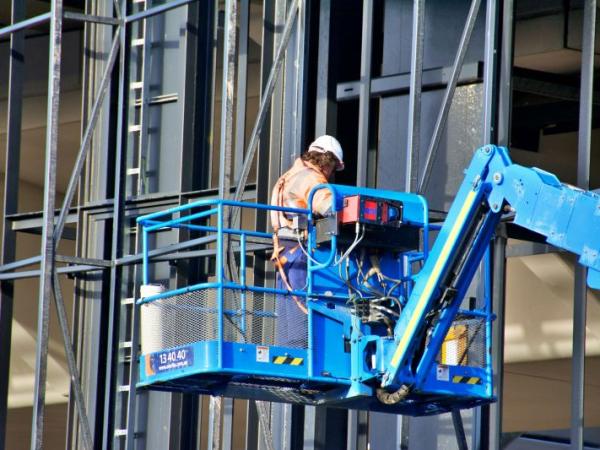
Where work at height cannot be avoided, the next priority is preventing a fall. An existing safe workplace with suitable edge protection may be used, or collective equipment such as a scaffold, tower scaffold or mobile elevating work platform may be required. Measures that protect everyone should be considered before systems that depend on each individual using personal protection correctly.
Fall arrest, safety nets and similar measures sit lower in the hierarchy because they do not prevent a fall from occurring. Where they are necessary, the method should minimise the fall distance and likely injury. Emergency and rescue arrangements must also be planned.
Is the equipment suitable for the task?
Equipment selection should reflect the height, duration, frequency, surface condition, ground conditions, access needs and work being performed. Managers should not accept equipment merely because it is already owned or readily available.
Ladders and stepladders are not prohibited. They may be appropriate where an assessment finds the risk is low, the task is of short duration, or workplace features make equipment offering greater protection unjustified. Short duration alone is not enough. As a guide, HSE recommends considering alternative equipment where a person would remain on a ladder or stepladder for more than 30 minutes at a time.
Are competence and supervision adequate?
Anyone planning, supervising or carrying out the work must have the skills, knowledge and experience required for their role. A person who is still learning must work under competent supervision. The competence needed for a simple ladder task will differ from that required to plan a complex scaffold or use specialist fall-protection equipment.
Supervisors should understand the approved method well enough to identify unsafe changes. They should intervene where workers use unsuitable access, overreach, bypass protective equipment or continue when weather, surfaces or site conditions differ from those assessed.
Have fragile surfaces and equipment checks been addressed?
Work on or near fragile surfaces should be avoided where possible. Where it cannot be avoided, the arrangements may require stagings, guard rails, restraint or arrest systems and safety nets. Workers must be informed about the hazard, and clients and contractors should agree how the work will be managed.
Access and protective equipment must be suitable, maintained and inspected. The type and frequency of inspection will depend on the equipment, its use and the conditions that could cause deterioration. Defects should be reported and dealt with before use continues.
Common Compliance Gaps
Weak arrangements often begin with choosing a ladder or harness before considering the hierarchy. Other warning signs include generic risk assessments, no rescue plan, uncertain contractor responsibilities, poor inspection records and no reassessment when site conditions change.
Fragile roofs and rooflights may also be overlooked during short maintenance tasks. The duration of the job does not remove the need for effective precautions.
Manager Checklist
- Has the need to work at height been challenged?
- Does the method follow the avoid, prevent and minimise hierarchy?
- Have collective controls been considered before personal protection?
- Is the equipment suitable for the task and site conditions?
- Are planners, supervisors and workers competent?
- Have fragile surfaces and falling object risks been addressed?
- Are inspections, maintenance and defect reporting controlled?
- Is there a workable emergency and rescue plan?
FAQ
Are ladders banned?
No. They can be used where the risk assessment shows they are suitable for low-risk, short duration work or where existing features restrict other options.
Is there a minimum height at which the Regulations apply?
No fixed minimum is used. The issue is whether a person could fall from one level to another and suffer personal injury.
Who is responsible when contractors carry out the work?
The contractor has duties, but a facilities manager, building owner or other person controlling the activity may also have responsibilities. The parties should agree how the work will be managed.
Must rescue arrangements be documented?
The work must be planned for emergencies and rescue. The detail needed should reflect the task and the equipment used. A fall arrest system should not be authorised without a practical means of recovering a suspended worker.