
Manual handling duties require employers to avoid hazardous manual handling where reasonably practicable, assess any hazardous handling that cannot be avoided, and reduce the risk of injury. For senior managers, the issue is whether work is designed and controlled to reduce risk, not whether staff have simply been told to “lift properly”.
What does this mean for managers?
Manual handling covers transporting or supporting a load by hand or bodily force. HSE guidance includes lifting, putting down, pushing, pulling, carrying and moving loads. A load may be an object, person or animal.
For managers, manual handling should be treated as a work design and risk control issue. The starting point is whether the task needs to be done in that way at all. If the handling can be avoided by redesigning the task, changing the process, using mechanical assistance or removing the need to move the load, that should be considered before relying on individual technique.
Where manual handling cannot be avoided, managers need assurance that the risk has been assessed and reduced so far as reasonably practicable. This includes looking at the task, the load, the working environment and individual capability.
Main duties or requirements
The Manual Handling Operations Regulations 1992 require employers to avoid the need for employees to undertake hazardous manual handling operations, so far as reasonably practicable.
Where hazardous manual handling cannot be avoided, employers must make a suitable and sufficient assessment of the risk of injury. They must then take appropriate steps to reduce the risk of injury to the lowest level reasonably practicable.
HSE guidance summarises the legal approach as: avoid hazardous manual handling where possible, assess the risk where it cannot be avoided, and reduce the risk of injury.
Employees also have duties. The Regulations require employees to make full and proper use of systems of work provided by the employer in compliance with the Regulations.
What this means in practice
A useful manual handling assessment should be based on the real task. Managers should not assume that a generic training course or poster is enough.
The assessment should consider the nature of the task, including twisting, stooping, reaching, carrying distances, repetition, pace, rest opportunities and team handling. It should also consider the load, including weight, size, shape, stability, grip and whether the contents may move.
The working environment matters too. Space constraints, uneven floors, steps, lighting, temperature and housekeeping can all affect the level of risk. Individual capability should also be considered, including whether the work may present higher risks for particular workers.
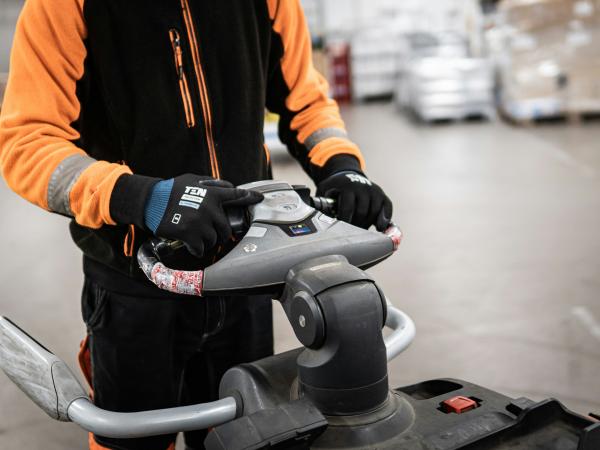
Control measures should aim to remove or reduce the hazardous handling. HSE guidance gives examples such as redesigning the task, automating or mechanising the process, using mechanical aids such as trolleys or hoists, changing the load, improving the work area, or organising work differently.
Common Compliance Gaps
A common weakness is treating manual handling as a training issue only. Training may be needed, but it does not replace avoiding, assessing and reducing risk.
Other gaps include assessments that do not reflect the actual task, failure to review work after changes, poor use or availability of handling aids, and weak follow-up where workers report discomfort, near misses or handling difficulties.
Managers should also be cautious about relying on a single “safe lifting technique”. HSE guidance is clear that reducing risk can involve changes to the task, the load and the working environment. If the work remains poorly designed, training alone is unlikely to provide strong assurance.
Another common issue is poor ownership. Manual handling risks often sit across operations, facilities, procurement, maintenance and line management. If nobody owns the controls, aids may not be maintained, storage layouts may drift, and unsafe handling can become normal practice.
Manager Checklist
Use this checklist to test whether manual handling arrangements are suitable:
- Has hazardous manual handling been avoided where reasonably practicable?
- Are assessments based on real tasks rather than generic assumptions?
- Do assessments consider the task, load, working environment and individual capability?
- Are mechanical aids available, suitable, maintained and actually used?
- Have storage layouts, delivery points and work organisation been reviewed?
- Are workers trained in the systems of work they are expected to follow?
- Are reports of discomfort, near misses or handling problems acted on?
- Are assessments reviewed when tasks, loads, equipment, staffing or layouts change?
Training and competence considerations
Training should support the system of work, not stand in place of it. Workers need to understand the risks, the controls, how to use handling aids, and when to stop or raise concerns.
Those carrying out manual handling assessments should be competent to identify the risks involved and decide what controls are suitable. For simple tasks, in-house knowledge may be enough. For more complex handling, managers may need someone with specific training or experience.
Supervisors also need enough understanding to spot drift in practice. If workers are bypassing aids, lifting heavier loads than expected, or improvising because the layout is poor, the assessment should be revisited.
Frequently Asked Questions
What is manual handling?
Manual handling means transporting or supporting a load by hand or bodily force. It includes lifting, putting down, pushing, pulling, carrying and moving.
What is the main duty on employers?
Employers must avoid hazardous manual handling where reasonably practicable. If it cannot be avoided, they must assess the risk and reduce the risk of injury so far as reasonably practicable.
Is manual handling training enough?
No. Training may be part of the controls, but employers must first consider avoiding hazardous handling and reducing risk through task design, mechanical aids and other measures.
Do manual handling assessments need to be written down?
Where a manual handling risk assessment is required, the significant findings should be recorded where the employer has five or more employees.
When should manual handling assessments be reviewed?
They should be reviewed when tasks, loads, equipment, workplace layout, staffing or working methods change, or where incidents, near misses or worker concerns suggest controls may not be effective.